

Double "acct": a distinct double-peaked supernova matching pulsational pair-instability models
Authors
C. R. Angus, S. E. Woosley, R. J. Foley, M. Nicholl, V. A. Villar, K. Taggart, M. Pursiainen, P. Ramsden, S. Srivastav, H. F. Stevance, T. Moore, K. Auchettl, W. B. Hoogendam, N. Khetan, S. K. Yadavalli, G. Dimitriadis, A. Gagliano, M. R. Siebert, A. Aamer, T. de Boer, K. C. Chambers, A. Clocchiatti, D. A. Coulter, M. R. Drout, D. Farias, M. D. Fulton, C. Gall, H. Gao, L. Izzo, D. O. Jones, C. -C. Lin, E. A. Magnier, G. Narayan, E. Ramirez-Ruiz, C. L. Ransome, A. Rest, S. J. Smartt, K. W. Smith
Abstract
We present multi-wavelength data of SN2020acct, a double-peaked stripped-envelope supernova (SN) in NGC2981 at ~150 Mpc. The two peaks are temporally distinct, with maxima separated by 58 rest-frame days, and a factor of 20 reduction in flux between. The first is luminous (M$_{r}$ = -18.00 $\pm$ 0.02 mag), blue (g - r = 0.27 $\pm$ 0.03 mag), and displays spectroscopic signatures of interaction with hydrogen-free circumstellar material. The second peak is fainter (M$_{r}$ = -17.29 $\pm$ 0.03 mag), and spectroscopically similar to an evolved stripped-envelope SNe, with strong blended forbidden [Ca II] and [O II] features. No other known double-peak SN exhibits a light curve similar to that of SN 2020acct. We find the likelihood of two individual SNe occurring in the same star-forming region within that time to be highly improbable, while an implausibly fine-tuned configuration would be required to produce two SNe from a single binary system. We find that the peculiar properties of SN2020acct match models of pulsational pair instability (PPI), in which the initial peak is produced by collisions of shells of ejected material, shortly followed by a terminal explosion. Pulsations from a star with a 72 M$_{\odot}$ helium core provide an excellent match to the double-peaked light curve. The local galactic environment has a metallicity of 0.4 Z$_{\odot}$, a level where massive single stars are not expected retain enough mass to encounter the PPI. However, late binary mergers or a low-metallicity pocket may allow the required core mass. We measure the rate of SN 2020acct-like events to be $<3.3\times10^{-8}$ Mpc$^{-3}$ yr$^{-1}$ at z = 0.07, or <0.1% of the total core-collapse SN rate.
Concepts
The Big Picture
Imagine watching a firework shoot into the sky, burst brilliantly, then go nearly dark, only to explode again two months later, even more spectacularly. That’s what astronomers witnessed in late 2020 when they trained their telescopes on NGC 2981, a galaxy about 500 million light-years away. A star had apparently died twice.
The event, catalogued as SN 2020acct, defied every known template for stellar explosions. Its light curve showed two distinct peaks separated by 58 days, with the star fading to just one-twentieth of its peak brightness in between. Something genuinely strange was going on.
The leading explanation invokes one of the most extreme processes in stellar death: pulsational pair instability, a rare mechanism that causes certain massive stars to tear themselves apart in multiple pulses before finally dying. A research team spanning Europe, North America, and Australia compiled observations across wavelengths, from ultraviolet to infrared, and ran detailed models to argue that SN 2020acct may be the clearest confirmation yet of this exotic death mechanism.
Key Insight: SN 2020acct’s double-peaked light curve, unlike any previously known supernova, matches theoretical models of pulsational pair instability, where a star with a ~72 solar-mass helium core ejects shells of material in violent pulses before its terminal explosion.
How It Works
The story begins with very massive stars, those ending their lives with helium cores (the dense central region remaining after a star has burned through most of its hydrogen) weighing more than roughly 45 solar masses. Inside these behemoths, temperatures climb so high that energetic photons spontaneously convert into electron-positron pairs: matched particles of matter and antimatter that carry energy away from the star’s interior. This siphons away the pressure holding the star up, triggering a catastrophic collapse.
For stars in a certain mass range, that collapse doesn’t kill the star immediately. Explosive oxygen burning reverses the implosion and blasts the outer layers into space. The star survives, for now. This is the pulsational pair instability (PPI) mechanism. Ejected shells hurtle outward at thousands of kilometers per second. When the terminal explosion follows, fresh ejecta slams into those earlier shells, converting kinetic energy into light and producing the bright initial flash observed as SN 2020acct’s first peak.
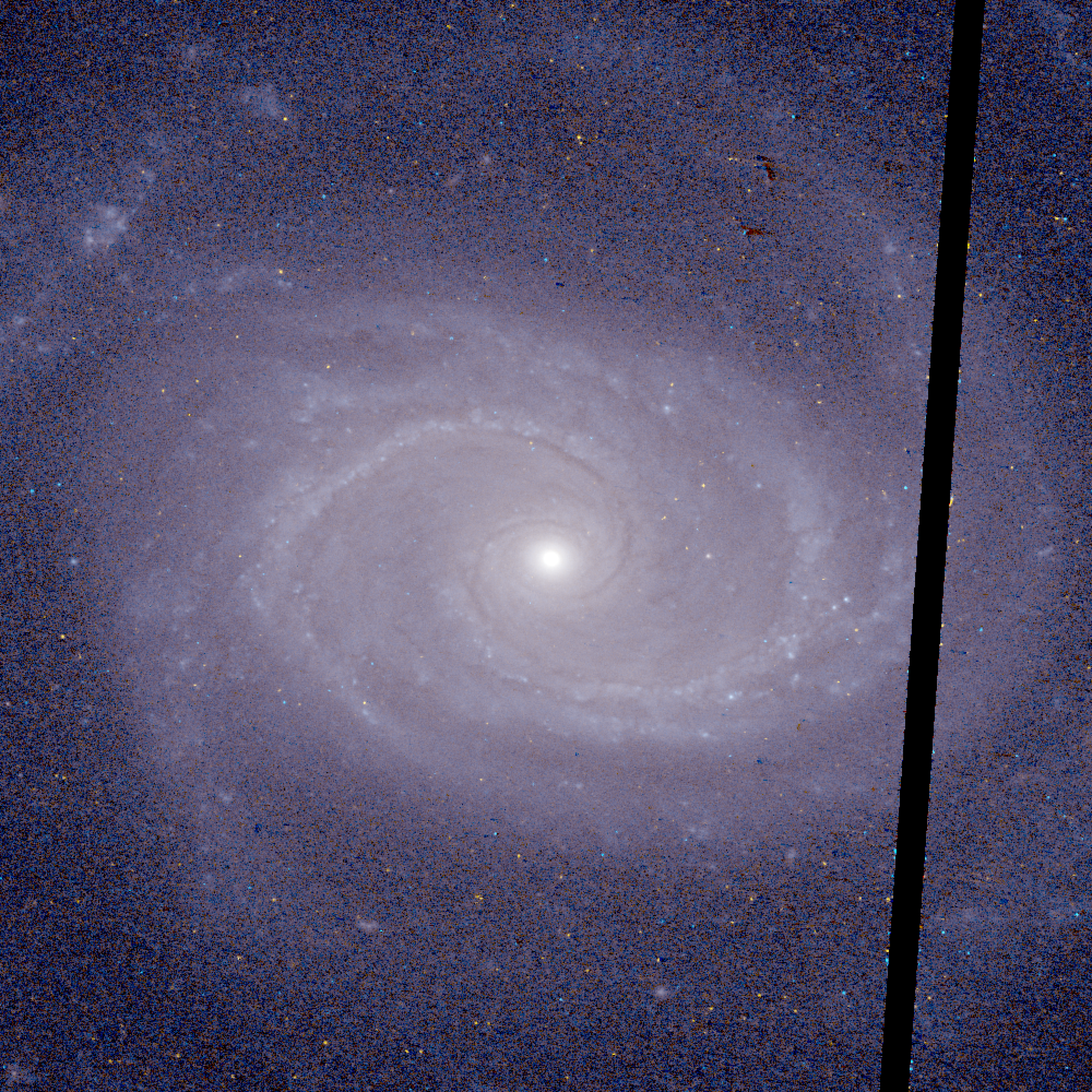
The observational evidence is thorough. The first peak was luminous and markedly blue, with a g − r color (an astronomical index measuring blue versus red light) of 0.27 ± 0.03 magnitudes. Its spectrum showed clear signatures of interaction with hydrogen-free circumstellar material (CSM), gas and debris shed during the pre-explosion pulses. The second peak arrived 58 days later and looked like a normal stripped-envelope supernova, an explosion where the dying star had already lost its outer hydrogen layers, with characteristic calcium and oxygen emission lines.
The team ruled out every alternative explanation:
- Two unrelated supernovae coinciding within 58 days in one galaxy? The probability is vanishingly small.
- Binary star system explosions? The required orbital configuration and timing would be implausibly fine-tuned.
- A magnetar or accretion engine powering a rebrightening? A magnetar is an ultra-dense spinning neutron star; an accretion engine is powered by material falling onto a black hole. The spectral evolution and timing match neither.
What did match was a PPI model built around a star with a 72 solar-mass helium core. Hydrodynamic simulations developed by co-author Stan Woosley reproduced both the timing and luminosity ratio of the two peaks. The initial pulse ejects roughly 16 solar masses of material; when the terminal supernova follows, the collision lights up as the first, bluer, brighter peak.
One wrinkle remains. The host environment carries a metallicity (enrichment in heavy elements like carbon, oxygen, and iron) of about 0.4 times solar. Standard models predict that stellar winds, the streams of gas continuously blown off a star’s surface, in such environments would strip too much mass before pair instability could trigger. The team proposes two workarounds: a late-stage binary merger combining two massive stars shortly before death, or a locally metal-poor pocket in the star-forming region missed by standard measurements.
Why It Matters
Pulsational pair instability has been a theoretical prediction for decades. Confirmed examples are rare, and truly unambiguous cases are nonexistent. SN 2020acct now stands as the strongest candidate yet. PPI represents a window into the very top of the stellar mass function, the most extreme stars the universe produces.
These massive stars were far more common in the early universe, when galaxies were metal-poor and stellar winds weaker. Understanding how they die tells us about the chemical enrichment of early galaxies and the mass distribution of black holes detectable by gravitational wave observatories like LIGO.
The measured rate of SN 2020acct-like events, fewer than 3.3 × 10⁻⁸ per cubic megaparsec per year, or less than 0.1% of all core-collapse supernovae, is consistent with theoretical predictions. It also sets a benchmark for the Vera Rubin Observatory’s Legacy Survey of Space and Time (LSST). That telescope will sweep the entire southern sky every few nights, capturing thousands of unusual transients per year. Machine learning classifiers trained on events like this one will be essential for identifying them in real time.
Bottom Line: SN 2020acct is the most compelling observational match to pulsational pair instability models ever found, showing that even stars in modestly metal-rich environments can die in this exotic, multi-stage fashion, and that surveys like LSST will soon test how rare this truly is.
IAIFI Research Highlights

This work combines multi-wavelength observational astronomy with detailed hydrodynamic stellar evolution models, connecting observational astrophysics and theoretical physics through light curve analysis and spectral classification.

Real-time classification of unusual transients like SN 2020acct motivates AI-driven alert-brokers and anomaly detection systems, tools IAIFI researchers are actively building to handle the data torrents from next-generation sky surveys.

SN 2020acct provides the clearest observational anchor yet for pulsational pair instability, constraining how the universe's most massive stars live and die and setting limits on the upper end of the black hole mass spectrum probed by gravitational wave detectors.
Future Rubin/LSST observations and spectroscopic follow-up of similar transients will test whether binary mergers or low-metallicity pockets can explain PPI candidates in unexpected environments; the paper is available at [arXiv:2409.02174](https://arxiv.org/abs/2409.02174).
Original Paper Details
Double "acct": a distinct double-peaked supernova matching pulsational pair-instability models
2409.02174
["C. R. Angus", "S. E. Woosley", "R. J. Foley", "M. Nicholl", "V. A. Villar", "K. Taggart", "M. Pursiainen", "P. Ramsden", "S. Srivastav", "H. F. Stevance", "T. Moore", "K. Auchettl", "W. B. Hoogendam", "N. Khetan", "S. K. Yadavalli", "G. Dimitriadis", "A. Gagliano", "M. R. Siebert", "A. Aamer", "T. de Boer", "K. C. Chambers", "A. Clocchiatti", "D. A. Coulter", "M. R. Drout", "D. Farias", "M. D. Fulton", "C. Gall", "H. Gao", "L. Izzo", "D. O. Jones", "C. -C. Lin", "E. A. Magnier", "G. Narayan", "E. Ramirez-Ruiz", "C. L. Ransome", "A. Rest", "S. J. Smartt", "K. W. Smith"]
We present multi-wavelength data of SN2020acct, a double-peaked stripped-envelope supernova (SN) in NGC2981 at ~150 Mpc. The two peaks are temporally distinct, with maxima separated by 58 rest-frame days, and a factor of 20 reduction in flux between. The first is luminous (M$_{r}$ = -18.00 $\pm$ 0.02 mag), blue (g - r = 0.27 $\pm$ 0.03 mag), and displays spectroscopic signatures of interaction with hydrogen-free circumstellar material. The second peak is fainter (M$_{r}$ = -17.29 $\pm$ 0.03 mag), and spectroscopically similar to an evolved stripped-envelope SNe, with strong blended forbidden [Ca II] and [O II] features. No other known double-peak SN exhibits a light curve similar to that of SN 2020acct. We find the likelihood of two individual SNe occurring in the same star-forming region within that time to be highly improbable, while an implausibly fine-tuned configuration would be required to produce two SNe from a single binary system. We find that the peculiar properties of SN2020acct match models of pulsational pair instability (PPI), in which the initial peak is produced by collisions of shells of ejected material, shortly followed by a terminal explosion. Pulsations from a star with a 72 M$_{\odot}$ helium core provide an excellent match to the double-peaked light curve. The local galactic environment has a metallicity of 0.4 Z$_{\odot}$, a level where massive single stars are not expected retain enough mass to encounter the PPI. However, late binary mergers or a low-metallicity pocket may allow the required core mass. We measure the rate of SN 2020acct-like events to be $<3.3\times10^{-8}$ Mpc$^{-3}$ yr$^{-1}$ at z = 0.07, or <0.1% of the total core-collapse SN rate.