

Quantum Inception Score
Authors
Akira Sone, Akira Tanji, Naoki Yamamoto
Abstract
Motivated by the great success of classical generative models in machine learning, enthusiastic exploration of their quantum version has recently started. To depart on this journey, it is important to develop a relevant metric to evaluate the quality of quantum generative models; in the classical case, one such example is the (classical) inception score (cIS). In this paper, as a natural extension of cIS, we propose the quantum inception score (qIS) for quantum generators. Importantly, qIS relates the quality to the Holevo information of the quantum channel that classifies a given dataset. In this context, we show several properties of qIS. First, qIS is greater than or equal to the corresponding cIS, which is defined through projection measurements on the system output. Second, the difference between qIS and cIS arises from the presence of quantum coherence, as characterized by the resource theory of asymmetry. Third, when a set of entangled generators is prepared, there exists a classifying process leading to the further enhancement of qIS. Fourth, we harness the quantum fluctuation theorem to characterize the physical limitation of qIS. Finally, we apply qIS to assess the quality of the one-dimensional spin chain model as a quantum generative model, with the quantum convolutional neural network as a quantum classifier, for the phase classification problem in the quantum many-body physics.
Concepts
The Big Picture
Imagine you’re a critic at an art gallery, but instead of paintings, you’re judging the outputs of an AI that generates images. Your job is to score the AI: are its creations diverse? Are they sharp and convincing? The classical machine learning community invented a clever tool for exactly this: the inception score, a single number that captures both the variety and quality of what a generative model produces. Now, as researchers push generative AI into the quantum realm, a natural question arises: how do you grade a quantum artist?
Quantum generative models are still in their infancy, but they could eventually produce outputs no classical computer can efficiently replicate. Quantum computers process information using the laws of quantum mechanics, letting them represent and explore far more possibilities simultaneously than any classical machine. Without a rigorous way to measure quality, though, building better quantum generators is like shooting in the dark. You need a ruler before you can optimize.
A team from the University of Massachusetts Boston and Keio University has now built that ruler. They introduce the quantum inception score (qIS), a metric for evaluating quantum generative models that extends its classical counterpart in a principled, physics-grounded way.
Key Insight: Quantum coherence, the ability of quantum systems to exist in superposed, wavelike states, turns out to be the fundamental resource that lets quantum generators beat classical ones. The qIS gives researchers a rigorous tool to measure exactly how much quantum advantage they’ve achieved.
How It Works
The classical inception score works by feeding generated samples through a classifier and measuring how confidently and diversely the classifier responds. High confidence on individual samples plus high diversity across samples equals a high score. Mathematically, it reduces to mutual information between generated samples and classifier labels: how much knowing one tells you about the other.
The qIS construction follows the same logic but replaces every component with its quantum counterpart. Instead of a classical probability distribution over labels, the quantum classifier produces a quantum channel, a map that transforms quantum states into other quantum states. The relevant information measure becomes the Holevo information, which quantifies the maximum classical information extractable from a quantum communication channel. The qIS is defined as the Holevo information of the quantum classifier channel acting on the generated quantum states.
The team proves four properties of qIS:
-
qIS is always at least as large as cIS. Measuring quantum outputs with projective measurements (collapsing the wavefunction) recovers the classical score, but destroys information in the process. The quantum score can never be smaller.
-
Quantum coherence accounts for the gap. Using the resource theory of asymmetry, a framework for formally quantifying properties that purely classical states cannot possess, the authors show that the excess of qIS over cIS is directly tied to quantum coherence preserved by the classifier. Destroy the coherence through pure dephasing (noise that scrambles quantum phases without dissipating energy), and qIS drops back toward cIS.
-
Entanglement pushes the score higher. When the generator produces entangled states, quantum correlations with no classical analogue, there exists a classifying strategy that pushes qIS beyond what any protocol examining one output at a time can achieve. This mirrors the well-known advantage of entangled probes in quantum sensing.
-
Thermodynamics sets the ceiling. The quantum fluctuation theorem connects thermodynamic work fluctuations to entropy production. The authors use it to derive an upper bound on qIS in terms of quantum efficacy, a measure of how efficiently a quantum process converts available energy into useful work. The laws of physics themselves cap the score.
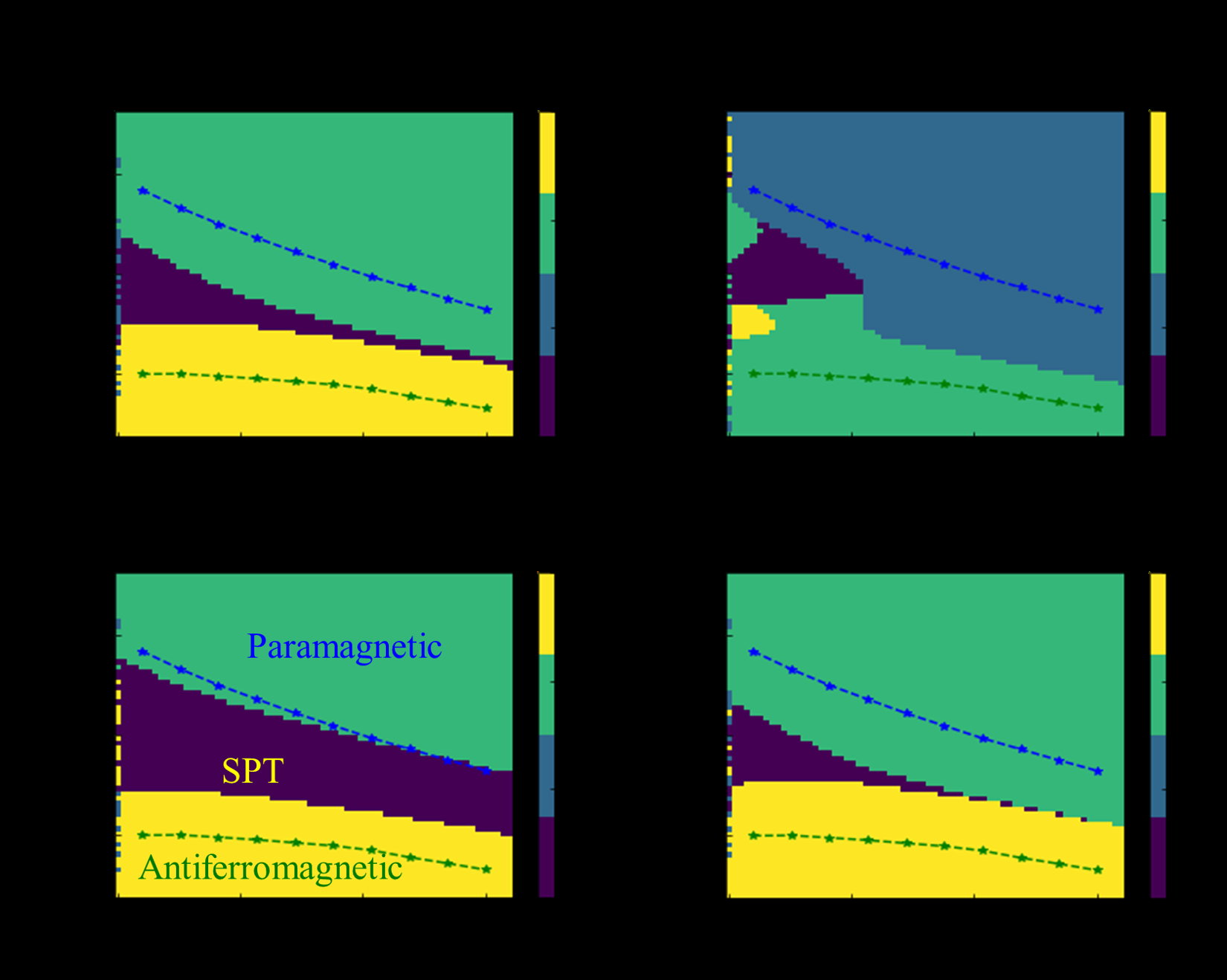
The paper also tests qIS in practice. The authors apply it to classifying phases of matter in a one-dimensional spin chain, a line of quantum particles whose spins can point up, down, or anywhere in between. These systems exhibit sharp quantum phase transitions: sudden changes in collective quantum behavior, analogous to water freezing into ice.
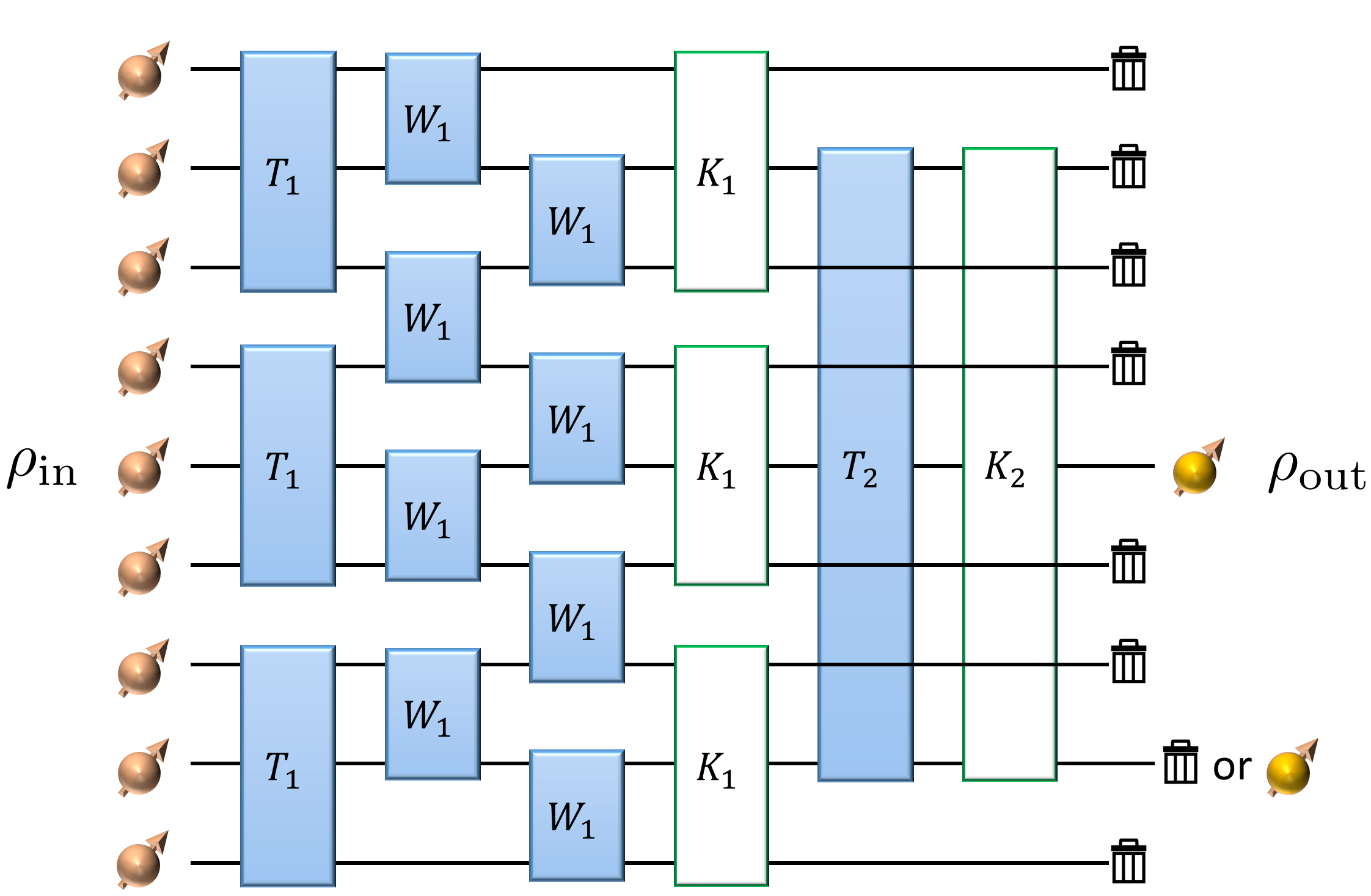
The quantum generative model is a variational quantum circuit, a programmable sequence of quantum operations whose parameters are tuned by an optimization algorithm, much like training a neural network. The classifier is a quantum convolutional neural network (QCNN), a quantum analogue of the image-recognition networks that power modern computer vision. It processes generated states through alternating layers of local quantum gates, progressively coarse-graining the system until a phase label emerges.
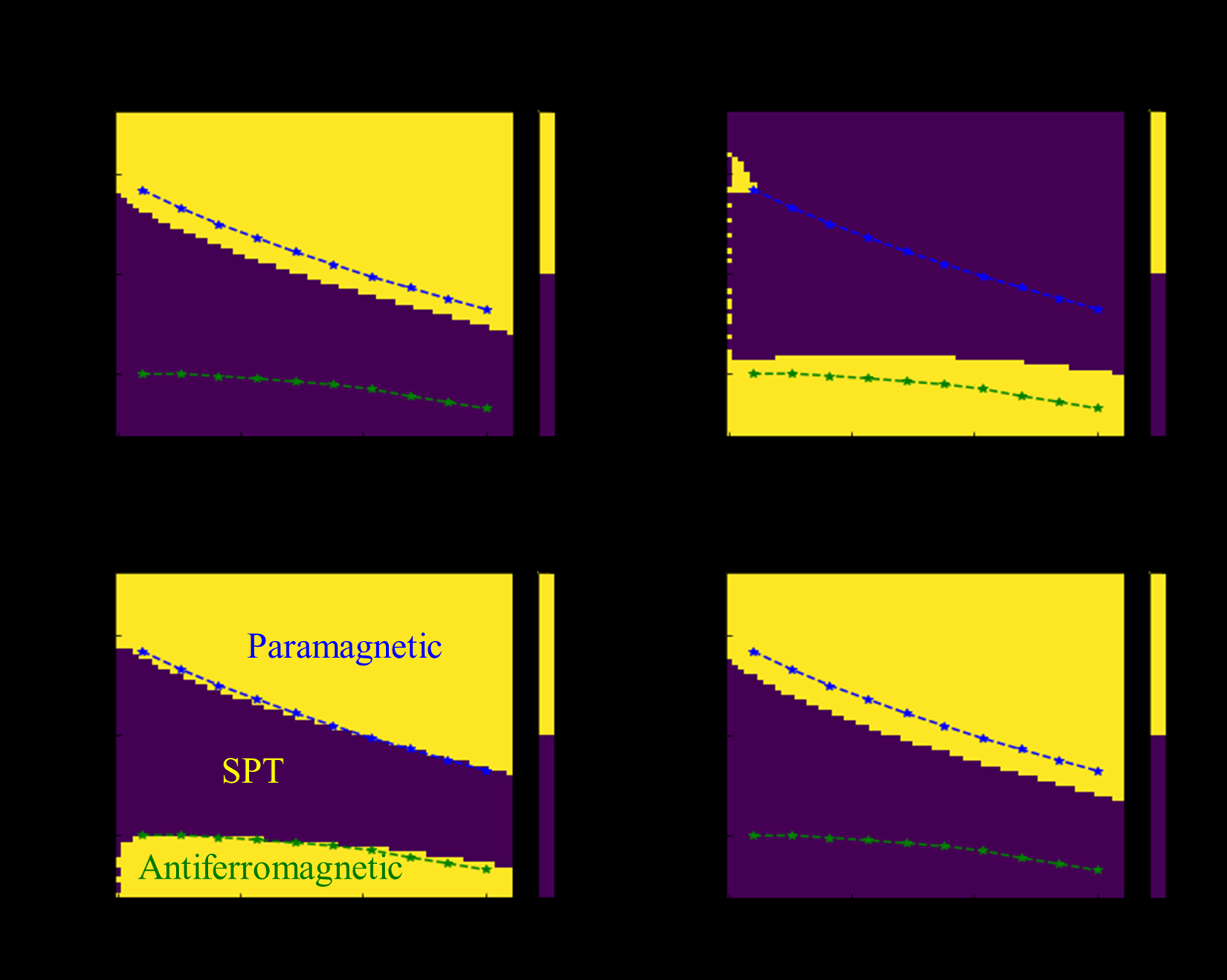
By computing qIS and comparing it to cIS, the researchers can quantify exactly how much the quantum nature of the generator and classifier contributes to performance. The gap between qIS and cIS becomes a diagnostic: not just “is this model good?” but “how quantum is its advantage?”
Why It Matters
For the AI community, qIS fills a real gap in the quantum machine learning toolkit. As quantum hardware matures and quantum generative models grow more sophisticated, researchers will need standardized benchmarks, just as classical deep learning converged on metrics like FID (Fréchet Inception Distance) and inception scores. The qIS offers a theoretically grounded starting point.
For physics, the connection between generative model quality, quantum information capacity, and thermodynamic constraints opens new ground. The paper places quantum machine learning within the broader framework of quantum resource theories, the formal tools physicists use to quantify what makes quantum systems powerful, including coherence and entanglement. Tools developed for quantum communication and quantum thermodynamics can directly inform how we build and evaluate quantum AI. And the fact that entanglement provides a provable quality boost for generative models adds a new chapter to the case for quantum advantage.
Bottom Line: The quantum inception score gives the field its first principled metric for quantum generative models, proving that quantum coherence and entanglement translate directly into measurable quality gains, with thermodynamics setting the ultimate limit.
IAIFI Research Highlights

This work connects quantum information theory, machine learning, and condensed matter physics by defining a quality metric for quantum generative models grounded in Holevo information and the resource theory of asymmetry.

The quantum inception score provides the quantum ML community with a rigorous, computable benchmark analogous to the classical inception score, enabling systematic evaluation and comparison of quantum generative models.

By applying qIS to quantum phase classification in 1D spin chains, the work shows how quantum generative models can be formally assessed on tasks central to quantum many-body physics, with performance directly tied to quantum coherence.
Future work may extend qIS to mixed-state generators, study its behavior near phase transitions, and develop hardware-efficient methods to estimate Holevo information on near-term devices; the paper by Sone, Tanji, and Yamamoto is available at [arXiv:2311.12163](https://arxiv.org/abs/2311.12163).